• Home
  • Inspiration
  • L’art de vivre en pleine conscience : trouver la paix dans le moment présent

L’art de vivre en pleine conscience : trouver la paix dans le moment présent

Modern life moves at a blistering, unforgiving pace. For many, simply surviving the daily schedule feels like running an endless marathon. In response to this collective exhaustion, the wellness industry often prescribes adding formal « self-care » to our routines. Yet, the very thought of carving out thirty minutes for meditation can frequently trigger a deep sense of anxiety. When your calendar is already overflowing, mindfulness can quickly begin to feel like just another burdensome requirement on an unmanageable to-do list.

This represents the fundamental paradox of adding new habits to a busy schedule. If the proposed cure for burnout requires sacrificing the little free time you have left, it is practically doomed to fail. However, living in total awareness does not have to be a separate, time-consuming activity.

Thich Nhat Hanh, a Buddhist monk and founder of the Plum Village tradition, pioneered mindfulness in the West from the early 1970s, developing new ways to apply ancient wisdom to modern life. He deeply understood that busy individuals needed a practice that fit seamlessly into their existing reality. Instead of treating meditation as an isolated task to be checked off, he taught that true awareness functions as an operational overlay—a new way of experiencing the mundane mechanics of daily life.

Living deeply simply means paying attention to the present moment without judgment. It involves being fully engaged in your experiences, whether they are pleasant or unpleasant. By fundamentally shifting our perspective, we can transform the routines we already perform into profound moments of peace, requiring absolutely no extra time on the clock.

Key Takeaways

Before diving into the mechanics of daily practice, here are the foundational principles of a zero-extra-time approach:

  • Zero extra time required: Mindfulness is not a difficult task; it is pleasant and relaxing and does not require extra time.
  • Universal application: True awareness can be practiced during any daily activity: brushing teeth, washing dishes, walking to work, eating, or driving.
  • An active energy: Living mindfully is not passive relaxation; it is a consciously generated energy that grounds you in your physical body.
  • No-goal meditation: Sitting meditation is done for the pleasure of sitting – there is nowhere to go and nothing to do.
  • Community power: Practicing alongside others generates a collective energy that sustains individual habits and fosters deep emotional transformation.

What is Mindfulness, Really? Beyond the Clinical Definitions

When people first encounter the concept of mindful living, they often receive a highly clinical definition. Western psychology frequently frames it as a purely cognitive exercise—a tool designed solely to lower cortisol, reduce physiological stress, and improve general well-being.

While these health benefits are entirely real and well-documented, reducing the practice to a mere psychological utility strips it of its rich, transformative depth. According to teachings rooted in the Plum Village tradition, the practice goes far beyond a static definition.

Mindfulness is the energy generated when we bring our mind back to our body and become aware of what is happening in the present moment, both within and around us. It is an active, vibrant force rather than a passive state of simply zoning out or ignoring reality.

One powerful way to cultivate this specific energy is by fully engaging your physical senses throughout the day. Pay close attention to the sights, sounds, smells, tastes, and textures that surround you. Savour every single bite of your food, listen deeply to the singing of birds outside your window, and physically feel the warmth of the sun resting on your skin.

By fully experiencing the present moment through this sensory immersion, you cultivate a much deeper appreciation for life as it is currently unfolding. The energy you consciously generate bridges the gap between a wandering mind and a grounded physical body. You are no longer lost in regrets about the past or anxieties concerning the future; you are actively participating in the reality of the now.

What is the « Zero Extra Time » Framework?

The greatest barrier to establishing a daily practice is the illusion of scarcity. We falsely believe that profound peace requires escaping to a quiet room for an hour every morning. To dismantle this misconception, we must look to a core teaching from Thich Nhat Hanh, Buddhist monk and founder of Plum Village: « Mindfulness is not a difficult task; it is pleasant and relaxing, and does not require extra time. »

Because it is an inherently pleasant and relaxing experience, it can be seamlessly layered over the chores you already have to do anyway. Mindfulness can be practiced during any daily activity: brushing teeth, washing dishes, walking to work, eating, or driving. By adopting this operational approach, your existing schedule remains completely untouched, yet your entire day transforms into a restorative retreat.

The « Zero-Time » Mindfulness Matrix

Routine Task Primary Mindfulness Anchor Mental Shift Required
Washing Dishes The physical sensation of warm water and the texture of soap bubbles. Wash the dishes solely to wash the dishes, not to blindly get them out of the way.
Driving a Car The grip of your hands on the steering wheel and your posture in the seat. Treat red lights as « bells of mindfulness » inviting you to physically smile and breathe.
Brushing Teeth The taste of the toothpaste and the rhythmic motion of the brush. Dedicate these moments entirely to self-care, consciously letting go of morning planning.
Eating a Meal The colors, textures, and complex origins of the food on your plate. Chew slowly, remaining completely present with the nourishment provided to your body.

Transforming the Mundane Mechanics

Consider the daily act of washing the dishes. Most people rush through this repetitive chore, viewing it as an annoying obstacle standing between them and evening relaxation. However, if you apply the zero-extra-time framework, the kitchen sink literally becomes your meditation cushion. You feel the warmth of the water on your hands, you notice the iridescence of the soap bubbles, and you breathe deeply. You are not washing the dishes to finish them; you are washing the dishes to be fully alive.

The exact same principle applies to your morning hygiene routine. Instead of unconsciously using this time to mentally draft emails or worry about your upcoming commute, you can generate immense awareness. Stand firmly on the bathroom floor, feel the bristles, and focus entirely on the act of cleaning. When you begin integrating these small, effortless moments into your day, the cumulative effect is significant.

How Can You Reclaim Your Commute with Walking Meditation?

For millions of people, the daily commute is a major source of frustration, anxiety, and physical tension. Whether you are navigating a crowded train station, pacing a busy city sidewalk, or simply walking from the parking lot to your office, movement is often viewed strictly as a means to an end. We treat walking merely as getting from point A to point B.

However, this mandatory movement offers an opportunity to practice without adding any time to your schedule. Walking meditation is practiced by walking in a relaxed manner, harmonizing the rhythm of steps with breathing, releasing tension, and appreciating the senses.

Harmonizing Steps and Breath

To reclaim your commute, begin by bringing your full attention to the soles of your feet. Notice the exact moment your heel makes contact with the ground, followed by your toes. As you walk, you can quietly synchronize your footsteps with your natural breathing pattern.

  • Inhale: Take two steps and mentally say, « In, In. »
  • Exhale: Take three steps and mentally say, « Out, Out, Out. »

This simple numerical rhythm prevents the mind from wandering off to your looming deadlines or the unread emails waiting in your inbox.

Releasing Physical Tension

As you walk in this relaxed manner, use the rhythmic motion to consciously release physical tension from your shoulders and jaw. There is no need to march rigidly or rush anxiously toward your destination. By appreciating the sensory inputs around you—the cool morning air, the sound of distant traffic, the rustling of trees—you transform a stressful commute into a deeply restorative practice. You arrive at your destination not depleted, but energetically refreshed and fully present.

Why Should You Sit for the Pleasure of Sitting?

While mindful living is perfectly designed for active daily routines, formal sitting meditation remains a cornerstone of the practice. However, modern wellness culture has dangerously morphed sitting meditation into just another metric to be optimized.

The ‘No-Goal’ Paradox

Many individuals approach a meditation cushion with the same aggressive mindset they bring to a corporate boardroom. They sit down with the strict goal of « achieving » calm, « conquering » their anxiety, or « optimizing » their brain waves for better afternoon productivity. This approach inevitably causes stress. When the mind naturally wanders, the practitioner feels they have « failed » at meditating, leading to frustration rather than peace. Treating stillness as a productivity tool fundamentally destroys the essence of the practice.

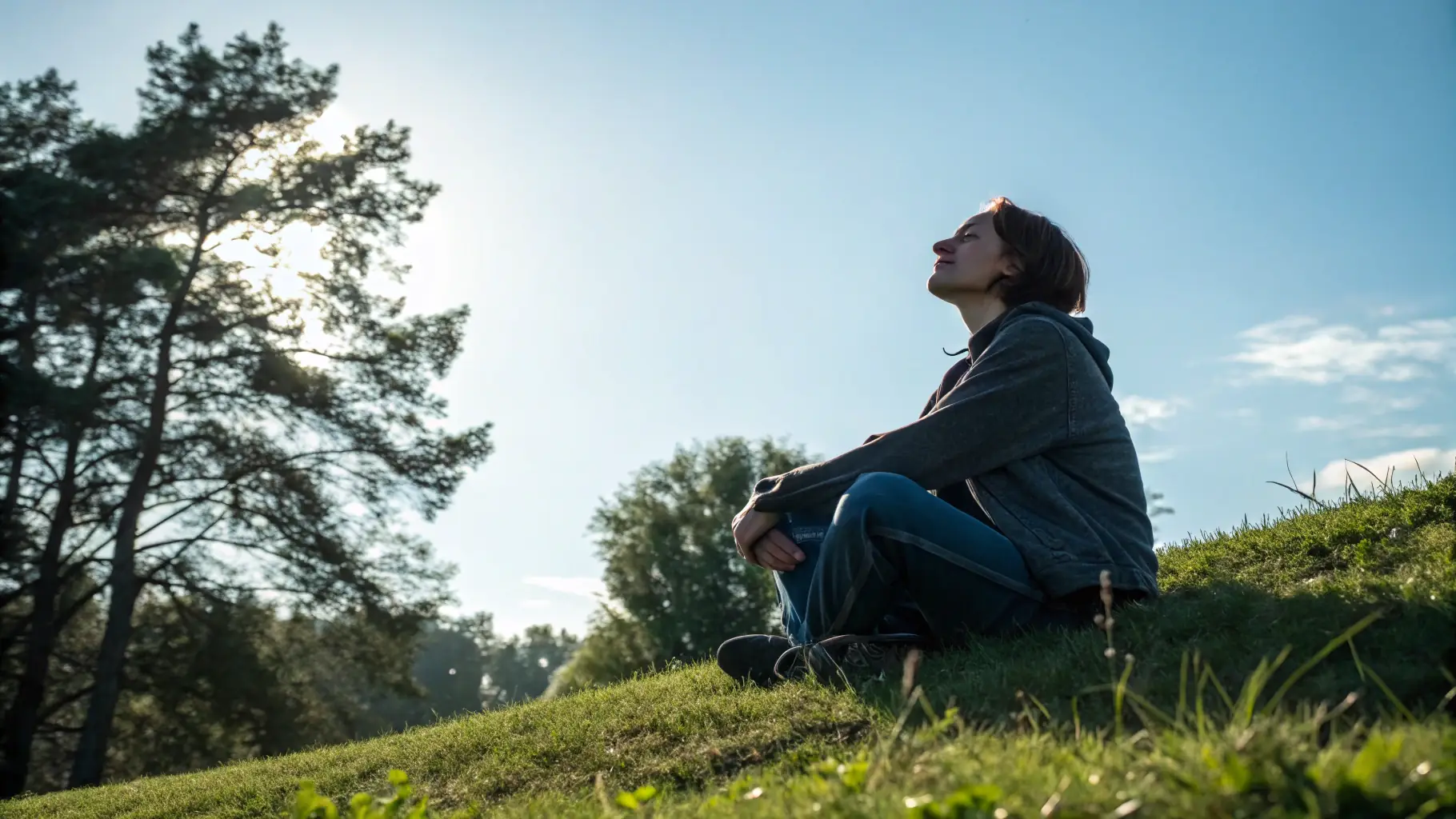
To bypass this performance anxiety, we must embrace the Plum Village approach. Sitting meditation is done for the pleasure of sitting – there is nowhere to go and nothing to do. It involves finding a comfortable posture, following the breath, and allowing thoughts to pass like clouds.

Escaping the Need to Achieve

When you sit, you embody the phrase often taught by Thich Nhat Hanh: « I have arrived, I am home. » Your ultimate destination is the here and now.

To practice this effectively:

  1. Find a quiet place and intentionally sit down comfortably, ensuring your back is relatively straight but completely relaxed.
  2. Gently focus your entire attention on the natural flow of your breathing.
  3. Simply observe your thoughts and feelings as they arise, actively choosing not to get carried away by them.
  4. Gently bring your attention back to your respiration every single time your mind inevitably wanders.

Even just a few minutes of this purposeless sitting each day can make a difference. By removing the pressure to « succeed » at meditation, you ironically create the exact conditions required for deep, lasting relaxation. You sit beautifully, just to sit.

What is the Role of ‘Deep Looking’ in Mindfulness?

It is easy to mistake mindfulness for a simple relaxation technique. While calming the physical body and slowing a racing mind are essential first steps, they are not the ultimate destination of the practice. True transformation requires moving beyond surface-level tranquility and stepping into profound emotional intelligence.

This transition is achieved through a process known as deep looking. Deep looking using mindfulness helps understand the true nature of perceptions, emotions, and phenomena, leading to liberation and transformation.

When you are deeply grounded in the present moment, you cultivate a safe internal environment to observe your own mind. If a strong emotion like anger, profound sadness, or intense joy arises, you do not suppress it, nor do you let it control your actions. Instead, you hold that emotion gently in the energy of mindfulness.

Understanding the Roots of Emotion

By looking deeply into your anger, for instance, you may discover that it stems from a place of fear or a past misunderstanding, rather than the immediate situation in front of you. This clear, non-judgmental observation naturally loosens the grip that negative emotions have on your nervous system. You begin to understand the true, impermanent nature of your perceptions.

This sustained practice builds incredible psychological resilience. By deeply investigating the phenomena of your own mind without judgment, you pave the direct path toward genuine emotional liberation.

Why Does Community Practice (Sangha) Matter?

In Western cultures, meditation is frequently marketed as a highly individualized, solitary pursuit. We are sold noise-canceling headphones, private meditation apps, and isolated retreats, reinforcing the idea that peace is something we must achieve entirely on our own. However, this isolation often leads to a fragile practice that easily crumbles under the weight of daily stress.

To build a resilient habit, it is crucial to embrace the social dimension of mindfulness. Practicing mindfulness with a community generates a powerful collective energy that can help heal and transform individuals and the world.

The Power of the Sangha

In the Plum Village tradition, a community of practitioners is called a Sangha. When you sit, breathe, or walk alongside others who are also dedicating themselves to the present moment, the generated energy is vastly multiplied.

  • Mutual support: A community naturally provides emotional support and accountability when your personal motivation inevitably wanes.
  • Shared wisdom: Listening to others share their struggles and breakthroughs with the practice broadens your own understanding.
  • Global impact: Cultivating a peaceful collective energy fundamentally alters how a group of people interacts with their local environment and society at large.

Whether it is a local meditation circle meeting in a community center or a dedicated online group gathering weekly, finding a Sangha prevents the practice from becoming overly isolated. It reminds us that our personal peace is intimately connected to the peace of those around us.

Frequently Asked Questions (FAQ) on Daily Mindfulness

Do I need a lot of time to practice mindfulness?

Absolutely not. The core philosophy of this approach is that it requires absolutely zero extra time. Because you are simply layering awareness over tasks you already perform—like washing dishes, brushing your teeth, or driving your car—you do not need to carve out a dedicated hour in your schedule. It is about fundamentally changing how you do things, not adding new things to do.

What is walking meditation?

Walking meditation is the practice of moving in a relaxed, highly conscious manner. Instead of walking just to reach a destination, you harmonize the rhythm of your footsteps with your natural breathing. By releasing physical tension and paying close attention to the sensory experience of walking, you transform a standard commute into a restorative, grounding exercise.

How do I sit correctly for meditation?

There is no strict, painful posture required. The primary goal is to find a quiet place and sit comfortably. Sitting meditation is done for the pleasure of sitting – there is nowhere to go and nothing to do. Keep your back relatively upright to remain alert, gently follow the flow of your breath, and allow your passing thoughts to drift by like clouds in the sky. If your mind wanders, gently bring it back without harsh judgment.

What is mindfulness in simple terms?

In the simplest terms, it is the active energy generated when we bring our mind back to our physical body and become fully aware of what is happening in the present moment. It is the practice of paying deep attention to your immediate experiences—both internal emotions and external sensory inputs—without judging them or attempting to forcefully push them away.

Conclusion: Your True Destination is the Present

Finding peace in a chaotic world does not require abandoning your responsibilities, booking an expensive remote retreat, or painfully forcing another daily habit into your already exhausted schedule. By viewing mindfulness as an operational overlay, you can seamlessly integrate profound awareness into the very fabric of your existing life.

From the simple act of washing your breakfast dishes to harmonizing your breath during a stressful morning commute, the opportunities to generate peaceful energy are entirely limitless and completely free. You do not need extra time; you only need a slight shift in perspective.

As you navigate the rest of your day, remember that your true destination is always the present moment. Try applying this zero-extra-time framework immediately. When you close this article and move on to your very next task, do it with full, unapologetic awareness. You have already arrived.

Votre adresse e-mail ne sera pas publiée. Les champs obligatoires sont indiqués avec *

Partager cette publication

Articles similaires